
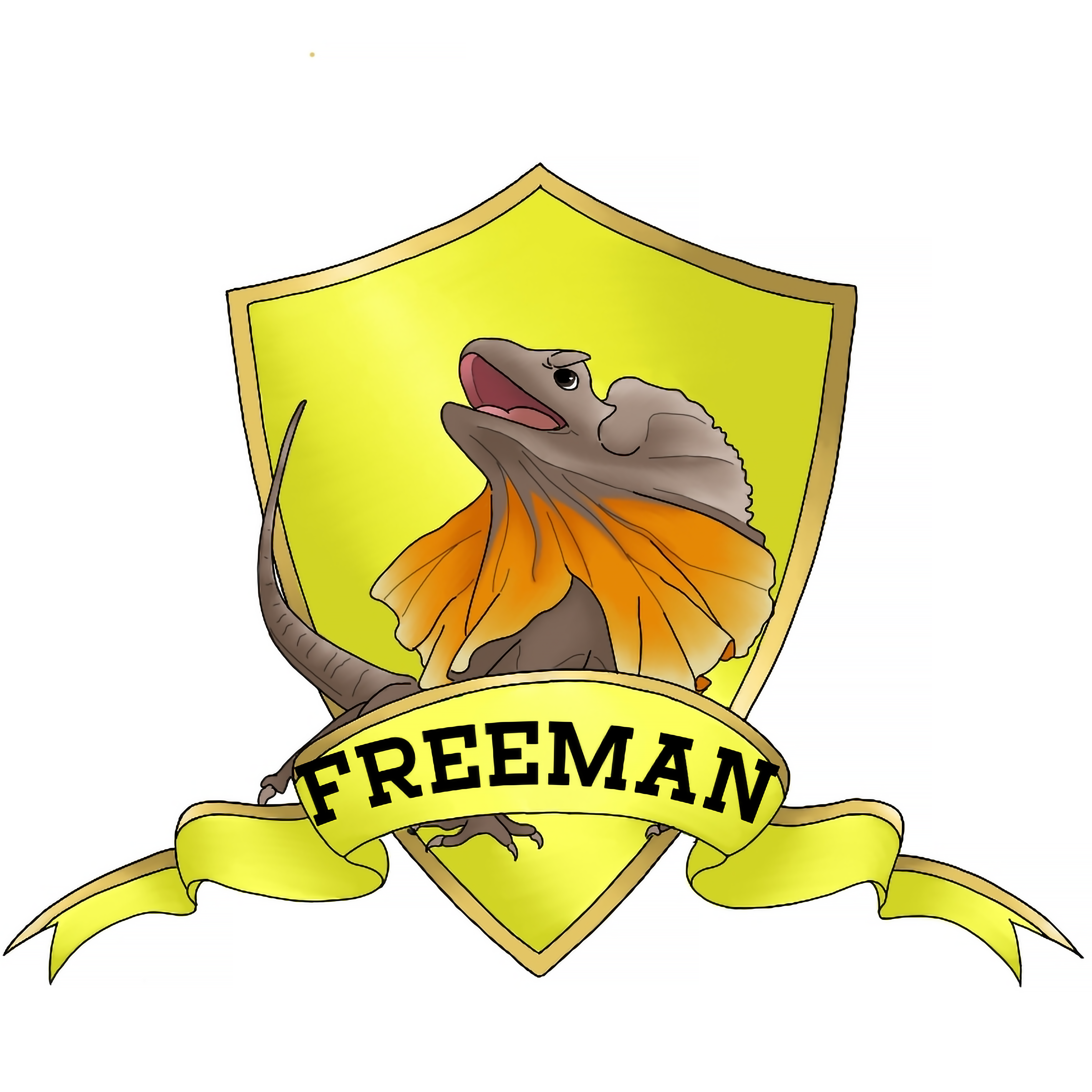
Freeman House is named in honour of Cathy Freeman, one of Australia’s most celebrated athletes and an enduring symbol of determination, courage and unity. At the Sydney 2000 Olympic Games, Freeman carried the hopes of a nation before producing one of Australia’s most memorable sporting moments, winning gold in the women’s 400 metres in front of more than 100,000 spectators.
Freeman’s story represents much more than sporting success. As a proud Aboriginal woman, her achievements and her famous victory lap carrying both the Australian and Aboriginal flags have become powerful symbols of pride, reconciliation and bringing people together.
The Frilled-Neck Lizard is the proud symbol of Freeman House. An iconic Australian animal, its distinctive frill represents confidence, courage and standing tall when challenged. Within the Freeman House identity, it also strengthens our connection to the Australian landscape and complements the native wildlife represented across the UCHSK House system.
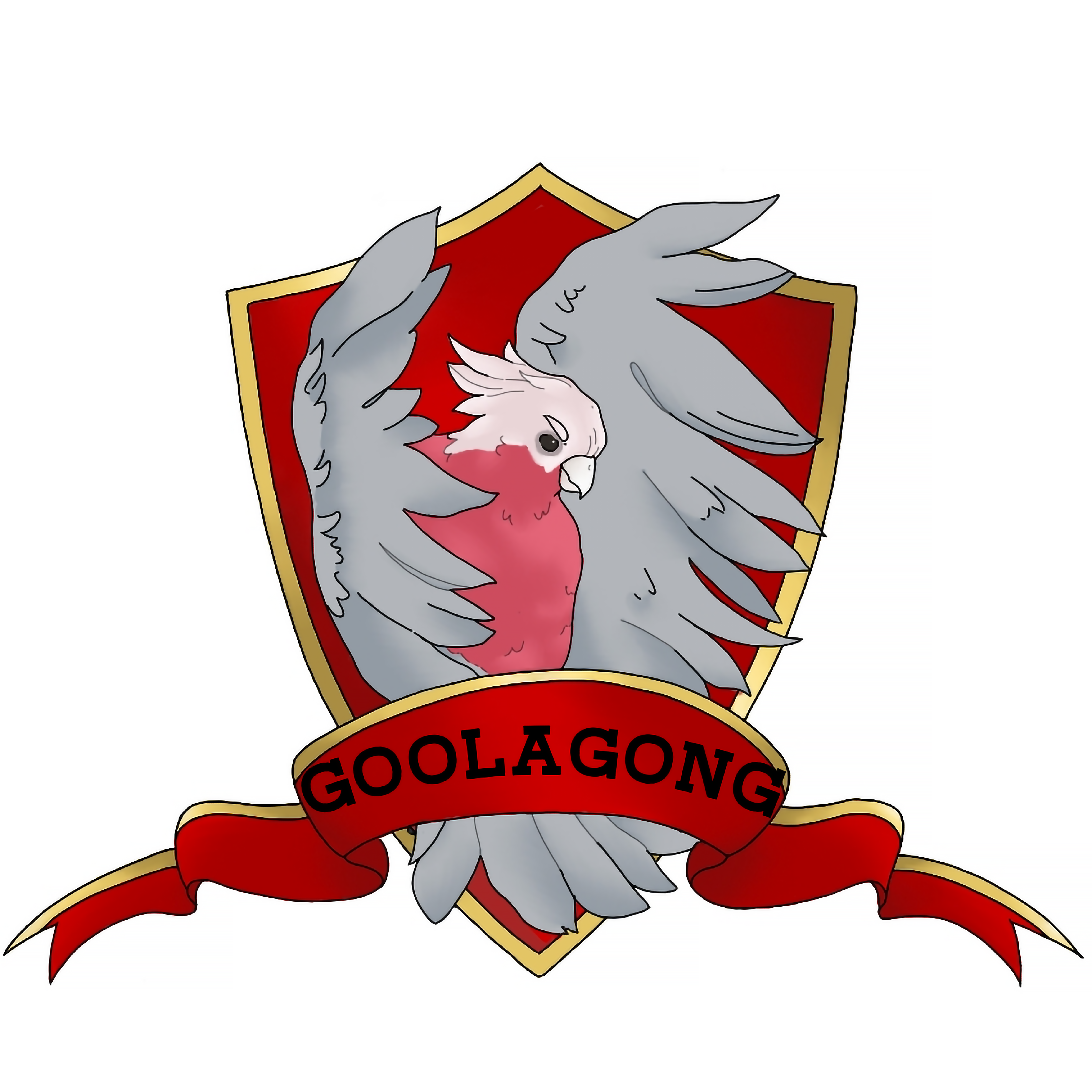
Goolagong House is named in honour of Evonne Goolagong Cawley, one of Australia’s greatest tennis players and an inspiring figure in Australian sport. During an extraordinary career, Goolagong Cawley won seven Grand Slam singles titles, including Wimbledon in 1971 and 1980, and reached the world No. 1 ranking. Her achievements reflect determination, resilience, humility and excellence. A proud Wiradjuri woman, Goolagong Cawley broke barriers and became a role model for generations of young Australians. Her legacy extends beyond the tennis court through her commitment to supporting and inspiring Aboriginal and Torres Strait Islander young people, encouraging them to pursue their goals with confidence and pride.
The Galah is the proud symbol of Goolagong House. Galahs are a familiar and highly recognisable part of the Kaleen and Canberra landscape, regularly seen gathering in local parks, school grounds and open spaces. Intelligent, social and adaptable, the Galah represents community, connection, resilience and the strength that comes from belonging. Its distinctive character also reflects the importance of celebrating individuality while remaining connected to those around us.
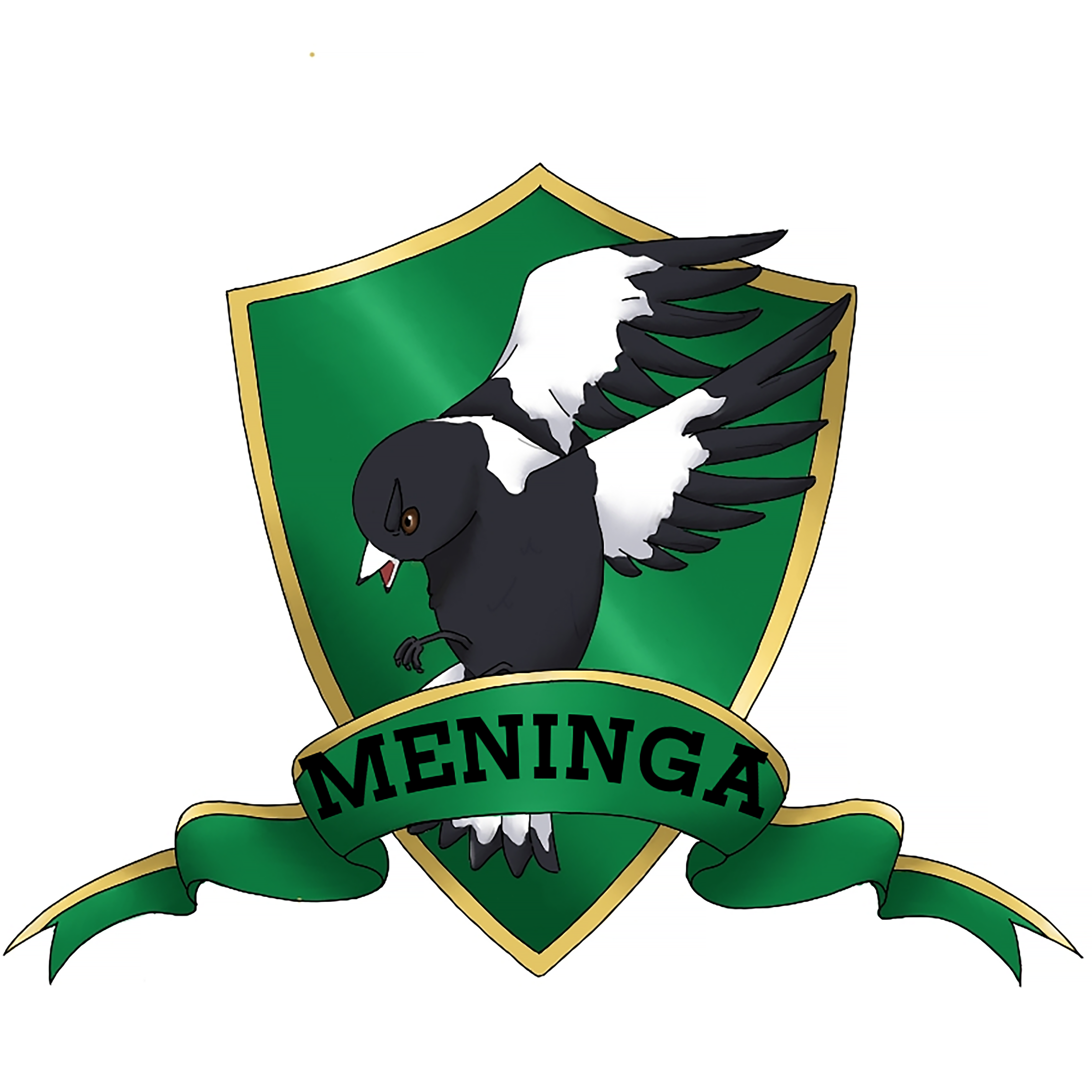
Meninga House is named in honour of Mal Meninga, one of Australia’s greatest rugby league players and an iconic figure in Canberra sport. As a foundation player and long-time captain of the Canberra Raiders, Meninga played a defining role in establishing the club and helping lead the Raiders to multiple premierships. He also represented Queensland and Australia, captaining his country and becoming one of the most respected leaders in Australian rugby league.
Meninga’s career represents strength, leadership, determination and teamwork. His connection to Canberra makes him an important part of our local sporting history, while his achievements at the highest level demonstrate what can be accomplished through commitment, hard work and bringing others with you.
The Australian Magpie is the proud symbol of Meninga House. Magpies are an unmistakable part of the Kaleen and Canberra landscape, commonly seen and heard throughout our school grounds, local parks and surrounding neighbourhoods. Intelligent, confident and highly social, magpies form strong family groups and are known for their distinctive calls and connection to their territory. They represent belonging, loyalty, courage and looking out for your community.